

We Can’t Even Call It Failure Anymore
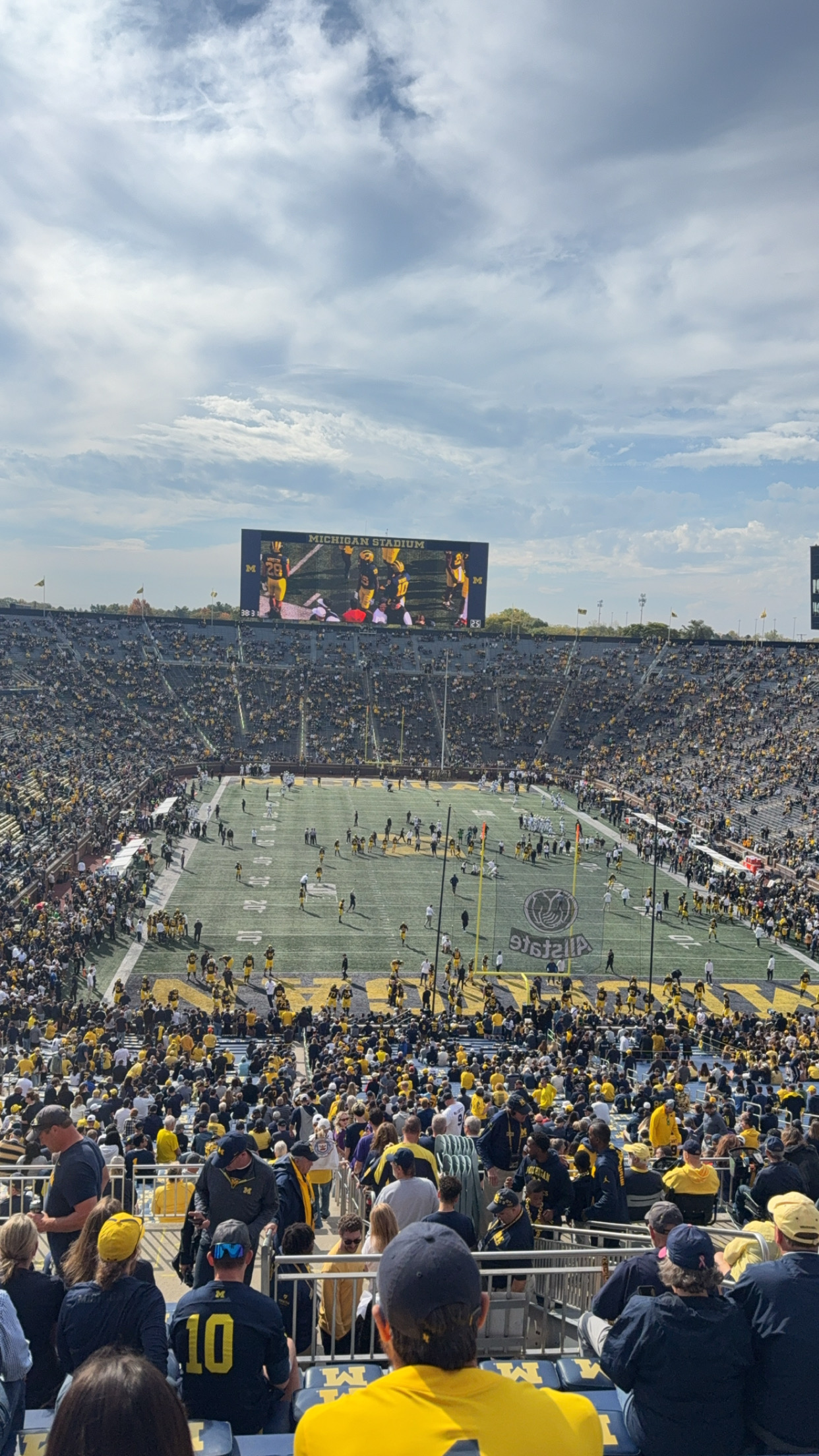
The University of Michigan recently announced that beginning in the fall of 2027, first-semester freshmen in its College of Literature, Science, and the Arts will no longer have letter grades recorded on their transcripts. Instead, their transcripts will show one of two designations: pass or no credit.
Not pass or fail. Pass or no credit.
Apparently, we cannot even use the word fail anymore. The student did not fail the class. He simply received no credit for it. This is the academic version of insisting that nobody lost the game. One team just did not receive a win.
Even summer school has been rebranded. Now kids go to credit recovery.
CREDIT. RECOVERY.
I realize that sounds like I am getting hung up on language. I am. Language matters. Words do not merely describe reality. They help shape how we understand it.
Failure is a real thing. Sometimes we try something and do not succeed. Sometimes we do not work hard enough. Sometimes we work incredibly hard and still come up short. Sometimes we discover that we are not as prepared, talented, disciplined, or capable as we thought we were.
That can hurt.
It can also teach us something.
Calling failure “no credit” does not change what happened. It only softens the language we use to describe it. More importantly, it tells students that the word itself may be too harsh for them to handle.
Michigan says this new pilot program will help students adjust to the demands of college, encourage them to take academic risks, and “curb the mental health crisis unfolding among college-aged individuals.” Students will still receive letter grades and feedback from their professors. The university will keep the grades internally for advising, scholarships, internships, athletic eligibility, and other purposes. The grades simply will not appear on the students’ transcripts or count toward their GPAs.
In other words, the grades will still exist. Students will still know what they earned. The university will still use those grades when it finds them useful. They just will not officially count in the same way.
All of this is being done in the name of mental health.
I am a counselor. I have spent much of my adult life sitting with people who are anxious, depressed, overwhelmed, grieving, traumatized, or simply trying to survive a season of life that feels impossible. I do not take the mental health struggles of college students lightly. Those struggles are real. Some students arrive on campus carrying serious mental illnesses, painful family histories, financial pressure, loneliness, and challenges most of the people around them will never see.
We should take those students seriously. We should create communities where people are known and supported. We should help students sleep, build healthy relationships, learn coping skills, and ask for help before their lives collapse.
But taking mental health seriously does not require us to treat every difficult circumstance as a threat to mental health.
That is where we keep getting this wrong. And, in my opinion, where we are actually creating a mental health crisis.
We have slowly begun defining mental health as the absence of discomfort. If we feel anxious about something, we assume the thing itself must be unhealthy. If someone feels overwhelmed, we look first for something outside of them to remove. If expectations create pressure, we lower the expectations. If the possibility of failure feels frightening, we hide the failure.
That may provide relief. Relief and health are not always the same thing.
The research on pass/fail grading is more complicated than either side of this argument would probably like. Studies involving medical students generally find that pass/fail systems reduce stress, improve students’ sense of well-being, and create a less competitive environment. Most of those studies do not find a significant decline in academic performance.
That should be considered in this conversation. We should not dismiss research simply because we do not like its conclusions.
It is also important to understand who was studied. Medical students have already finished college, survived an intensely competitive admissions process, and proven that they can perform academically. They continue to face competency requirements, clinical evaluations, licensing exams, and the possibility of not being allowed to practice medicine. A pass/fail system in medical school may reduce unnecessary competition between highly capable students without removing meaningful standards.
That is not necessarily the same thing as masking the first-semester grades of 18-year-olds who have just arrived from high school.
The research involving undergraduate students is much thinner and far less decisive. One recent study of students who completed an entire first year without traditional grades found no significant improvement in stress, loneliness, or social integration. It also found no meaningful decline in their later academic performance. The students showed greater motivation and relied less on rote learning, which is worth noting. Researchers also found that removing grades could create a different kind of anxiety because students were unsure how well they were actually doing.
So, pass/fail grading may reduce stress for some students. It may encourage exploration. It may even help some students focus more on learning than protecting a perfect GPA.
What the research does not show is that hiding first-semester grades will curb the mental health crisis among college students. Reduced academic stress is not the same thing as reduced depression, fewer anxiety disorders, or less suicidal thinking. Michigan has taken a reasonable educational hypothesis and wrapped it in an enormous mental health claim that the research does not establish.
Even Michigan’s own explanation is revealing. The university does not say, “The research demonstrates that this will improve students’ mental health.” It says, “We believe that covering grades will help students start strong and curb the mental health crisis.”
They believe it.
Perhaps they are right. This is a pilot program, so maybe they intend to find out. But if we are going to make a sweeping change in the name of mental health, we should be able to explain what we mean by mental health and how we will know whether the policy improved it.
Did students report less stress for one semester? Did their depression improve? Were fewer students hospitalized? Did they remain in school at higher rates? Did they develop better coping skills? What happened when letter grades began counting in the second semester? Were students more prepared to handle that pressure, or did we simply postpone it?
Those are different questions. They require different measurements.
There is also another question that seems increasingly unwelcome: Is some stress good for us?
Kelly McGonigal was the first professional to introduce me to the idea that stress is not inherently good or bad. How we understand stress can significantly influence how it affects us.
She gave a TED Talk on the topic several years ago. When she first tells the audience that believing stress is harmful may influence how harmful it becomes, you can hear the packed auditorium laugh. Loudly.
Then she presents the research.
Manageable stress is part of how human beings develop. We encounter something difficult. We feel anxious. We learn how to prepare, regulate our emotions, tolerate uncertainty, recover from disappointment, and try again.
Resilience is not developed by repeatedly being told that hard things are easy. We don’t grow it by making things easier.
It develops when we discover that hard things are hard and that we can still face them.
This is one of the strangest ways therapeutic language has been used against the very people it was supposed to help. Good counseling does not teach people that feeling anxious proves the situation is dangerous or should be avoided. It helps them examine the beliefs producing the anxiety, challenge what is distorted, and face difficult situations with a more accurate understanding of themselves and what they can handle.
We help people learn that feeling uncomfortable does not necessarily mean they are unsafe. Feeling pressure does not automatically mean they are being harmed. Failing does not make them a failure.
That last distinction is especially important. A grade describes a performance. It does not define a person. Receiving an F means that a student failed to meet the requirements of that particular class at that particular time. It does not mean the student is stupid, worthless, permanently incapable, or doomed.
Perhaps instead of removing the word fail, we should teach students what failure actually means.
It means something did not work. It means they have gained more information and will need to make changes—maybe even painful changes.
It may mean the student needs to study differently, ask for help, change majors, sleep more, party less, or reconsider whether college is the right path. It may also mean the professor taught poorly, the grading system was flawed, or the student encountered circumstances that made success nearly impossible.
Failure does not always tell us why something went wrong. It tells us that something went wrong. That information has value.
I am not arguing that every grading practice is good. I’ve openly stated before that I think grades are a made-up construct. Our obsession with GPAs can produce unhealthy competition, perfectionism, cheating, and students who are more interested in collecting points than actually learning. There is nothing sacred about the traditional letter-grade system. Thoughtful educators should be free to experiment with better ways of teaching and evaluating students.
I am very concerned that a university as prestigious as the University of Michigan is saying out loud that our K-12 educational system is creating students who are so fragile, so lacking resilience that they cannot handle seeing the actual grade.
Perhaps Michigan should stop rejecting applicants. After all, isn’t rejection another form of failure? Maybe those students simply received “no admission.”
If Michigan believes grade covering is a better educational model, it should make that argument. If it believes the first semester of college requires a deliberate transition period, it should make that argument. Those are legitimate conversations.
And then we should all stop and ask ourselves why. Why is it a better system? Why have we come to this place? Are our K-12 educational methods producing the young adults we’re trying to raise?
Calling it a response to the mental health crisis does something else. It turns an ordinary source of pressure into a mental health threat. It suggests that protecting students from the consequences of their performance is a form of psychological care.
That is the part I cannot accept.
College is supposed to be difficult. Not cruel. Not needlessly destructive. Difficult. Students are supposed to encounter ideas they do not understand, assignments they cannot complete easily, and standards they may not immediately meet. They should encounter ideas they don’t agree with or even like.
They are supposed to discover both what they can do and where they need to grow.
Some of them will fail along the way.
We do not help them by pretending otherwise. We help them by making sure failure is not fatal, teaching them how to learn from it, and refusing to confuse one bad grade with the value of their life.
Good mental health cannot mean a life without pressure, disappointment, consequences, or failure. Such a life does not exist.
If that is the version of mental health we promise young people, we are not preparing them for real life. We are making ordinary life feel like evidence that something has gone terribly wrong.
And that is what we’re preparing them for: a failed, miserable life.
The answer to every difficult feeling cannot be to remove the difficult thing. Sometimes the healthier answer is helping people become strong enough to face it.