

Have you ever had two pieces of information—
but no bridge between them?
So you built one.
Filled in the gap.
Connected the dots.
Only to find out later…
you got it wrong?
You’re not alone.
Malcolm Gladwell wrote an entire book on it called Talking to Strangers.
Turns out, we’re wrong as often as we’re right
when we fill in the blanks.
Our brains crave connection,
even if it’s false.
I once had a client tell me,
“I didn’t want to see you.
In fact, I was scared to see you.”
When I asked why, she said,
“I heard you were direct.
Bold. Maybe even brash.
When I was with my husband,
he was mean—
and called it bold.
I didn’t want more of that.”
She wasn’t alone either.
Another woman in our community was referred to me.
She won’t come.
Why?
Same fear.
Her husband has cheated.
Repeatedly.
He’s cruel.
And now—
she’s scared of me.
Because her story told her I would be mean.
I get it. I do.
But I’d be lying if I said it didn’t sting.
I wrestle with it.
What can I do to change that perception?
Answer’s always the same:
Not much.
I hate that.
I want to help people.
See them not only succeed but thrive.
Sometimes people don’t want to see a counselor
because they want someone who tells them what they want to hear.
This isn’t that.
This was something else entirely.
She was afraid.
So afraid, she’s continued to live in distress
under a roof with a man who continues to cheat on her.
Who mistreats her.
My client didn’t want that either.
She was afraid.
And fear is smart.
It builds bridges from pain.
In her case:
- Her life wasn’t what she wanted it to be. I was offered as a potential help.
- I was described as direct, bold, maybe even brash.
That second one?
It lit up something old in her.
And without realizing it—
her brain built a story.
A story that I would be mean to her
because her unexamined belief was that bold people are mean
.
Sometimes, we engage in something called confabulation.
It’s what happens when we fill in gaps to keep coherence in our life.
Sometimes, our memory just fills things in. Our schemas kick in.
Other times, our brains push us to make fast decisions
because the situation feels dynamic or threatening.
Do a quick online search
and you’ll find all kinds of ways our memory can mislead us.
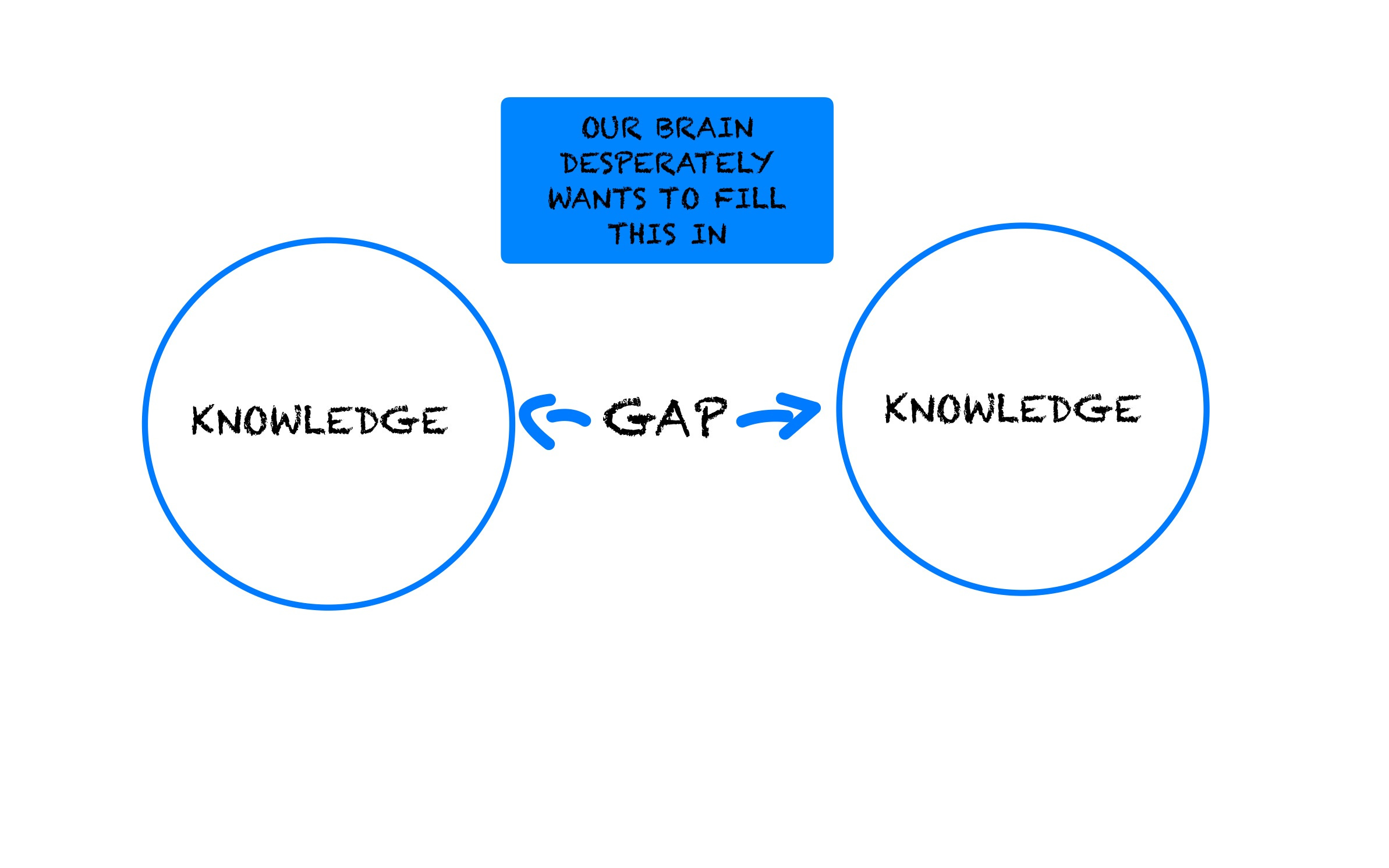
Worse—if we have two pieces of information and a gap?
Our brain nags at us until we solve it.
And once we do,
we get a cognitive reward.
It feels good.
Even if the solution is wrong.
Even if it actively works against what we want.
So why are we talking about this?
Because I’ve done it.
You’ve almost certainly done it.
It’s nearly impossible to live without doing it.
And odds are—it’s keeping you stuck.
Even though…
it feels good.
The process is relatively straightforward.
But where do we get the information we use to fill those gaps?
From past experiences.
And if those experiences were traumatic?
Hurtful?
Damaging?
They create bias.
Bias meant to protect us—
but often ends up hurting us.
So, what do we do?
It’s a multi-tiered, multi-step process.
Let’s look at a few steps.

Self-Examination — What am I assuming?
This first step can be the hardest.
We have to separate what we know
from what we think we know.
I often ask clients to consider what they could testify to in court—
something they’ve seen, heard, or physically touched—
versus what they think they’ve experienced.
Ask yourself:
“What am I assuming here?”
When we name our assumptions,
we can question them.
Self-Reflection — Why do I assume this?
This can also be tricky.
The client at the beginning of this post
was living in a world that reinforced
a lot of what her husband said to her.
Questioning his narrative
threatened the very paradigms she lived by.
And when we feel like our way of life might be threatened?
Our brain speeds up.
Rarely slows down—
unless we train it to do exactly that.
We start that training
with self-reflection.
It forces our brain to pause.
To consider other possibilities:
- What else could explain this? What else could fill in the gap?
- Do I know this—or is it a guess?
This practice trains your brain
to slow down between input and interpretation.
Verification — Check with Other Humans
This step? Scary.
But powerful.
Ask others for input.
That client asked others who had worked with me:
“Is he mean?”
Eventually, she asked herself
if being bold really had to mean being cruel.
This step is vulnerable—
because it’s relational.
It requires trust.
When we’re filling in the gaps about another person,
this step can be game-changing.
“Hey, I was thinking this—
and I’m wondering if it’s accurate.”
That simple phrase can open doors.
Ask multiple people if you need to.
It’s the living embodiment of
“Be curious, not judgmental.”
When we gather more data,
we slow our brains down.
And that gives us the chance
to verify what we’re using to build the bridge.
Living in Distress — Training Our Minds to Live with the Gap
Not knowing hurts.
It’s stressful.
Our brains hate it.
We hate it.
But learning to live in that distress?
That’s where growth happens.
It’s called cognitive discipline—
and it matters.
The more we do it,
the more we strengthen neural pathways
that build emotional maturity.
And emotional maturity?
It creates physical and relational maturity.
Emotional immaturity leads to emotional reasoning—
and that rarely ends well.
Forward Thinking — What Do I Want to Achieve?
Once you’ve gathered your data,
ask yourself the most important question:
What course of action
gives me the best chance
of achieving what I want?
And while you’re at it—
ask the three big questions I wrote about here.
When we fill in the gap
without examining it,
we often end up somewhere we never meant to go.
My client?
She told me all of this during a session.
She also told me that her assumptions—
the gap fillers—
were wrong.
They had kept her trapped.
Stuck.
Afraid.
But when she questioned them?
She found freedom.
Courage.
Change.
Let me be clear:
That’s what I want for you.
This isn’t a story about how I’m a nice guy.
(Though I hope I am.)
It’s a story about how false assumptions
can quietly trap us.
I know this firsthand.
I’ve lived it.
I still do sometimes.
You probably have too.
But—
today is a new day.
For all of us.
We can chase new adventures.
We can pursue new freedom.
We can choose new health.
And it starts—
with a few small, powerful steps.
May you have the courage
to question what you’ve always believed.
May you have the strength
to sit in the unknown,
and the wisdom
to wait for what’s true.
May you learn to pause—
even when the silence is loud.
May your curiosity rise above your fear,
and your grace be stronger than your assumptions.
And when you build bridges in your mind,
may you choose the kind
that lead you home.
Keep going.
You’re doing more than you know.