
This is part 4 of a 4 part series. You can read part 1 here, part 2 here and part 3 here.
For the last few weeks, I’ve been writing about words.
I didn’t actually set out to write a series about words. I started by writing about the difference between discomfort and being unsafe. That led me to think about what happens when a diagnosis becomes an identity. From there, I started thinking about all of the therapy words that have found their way into our everyday conversations.
Trauma.
Triggered.
Narcissist.
Gaslighting
Boundaries.
Toxic.
Unsafe.
Invalidating.
Anxiety.
Depression.
Nervous system.
Let’s be honest, the list of therapy words that crept into our everyday language is long. There are benefits to that and there are drawbacks that can hinder our growth. There is always the danger of the Dunning-Kruger Effect.
To be clear, it’s not that I don’t think these words are important. In fact, I think they are very important. But, somehow in my processing of this series, I realized I wasn’t really writing about therapy words at all.
I was writing about the power of language. Someone once told me that words create our reality. At the time, I thought he was overstating his position.
Now, I think I understand what he was saying.
Words are incredibly useful tools. They allow us to take something complicated and give it a name. Sometimes, maybe often, that name changes everything.
Imagine spending years struggling with something you don’t understand. Then someone finally gives you language for it.
There’s a name for what happened to you.
There’s a name for what you’re experiencing.
There’s a name for the pattern you keep repeating.
Imagine the relief that comes with that knowledge. Gaining that understanding can be incredibly freeing.
The problem begins when the tool that helped us understand our experience starts determining how we understand every experience that follows.
That’s the thread running through this entire series.
The word “unsafe” can help us recognize situations where we are genuinely in danger. It can also convince us that discomfort itself is dangerous. I just watched a video where someone talked about the benefits they had experienced by going through immersion therapy.
The comment section was full of people who not only disparaged her, they also explained how she was wrong. Let that sink in for a moment, they not only told her she was wrong about how well exposure therapy worked but that she was wrong about her own experience.
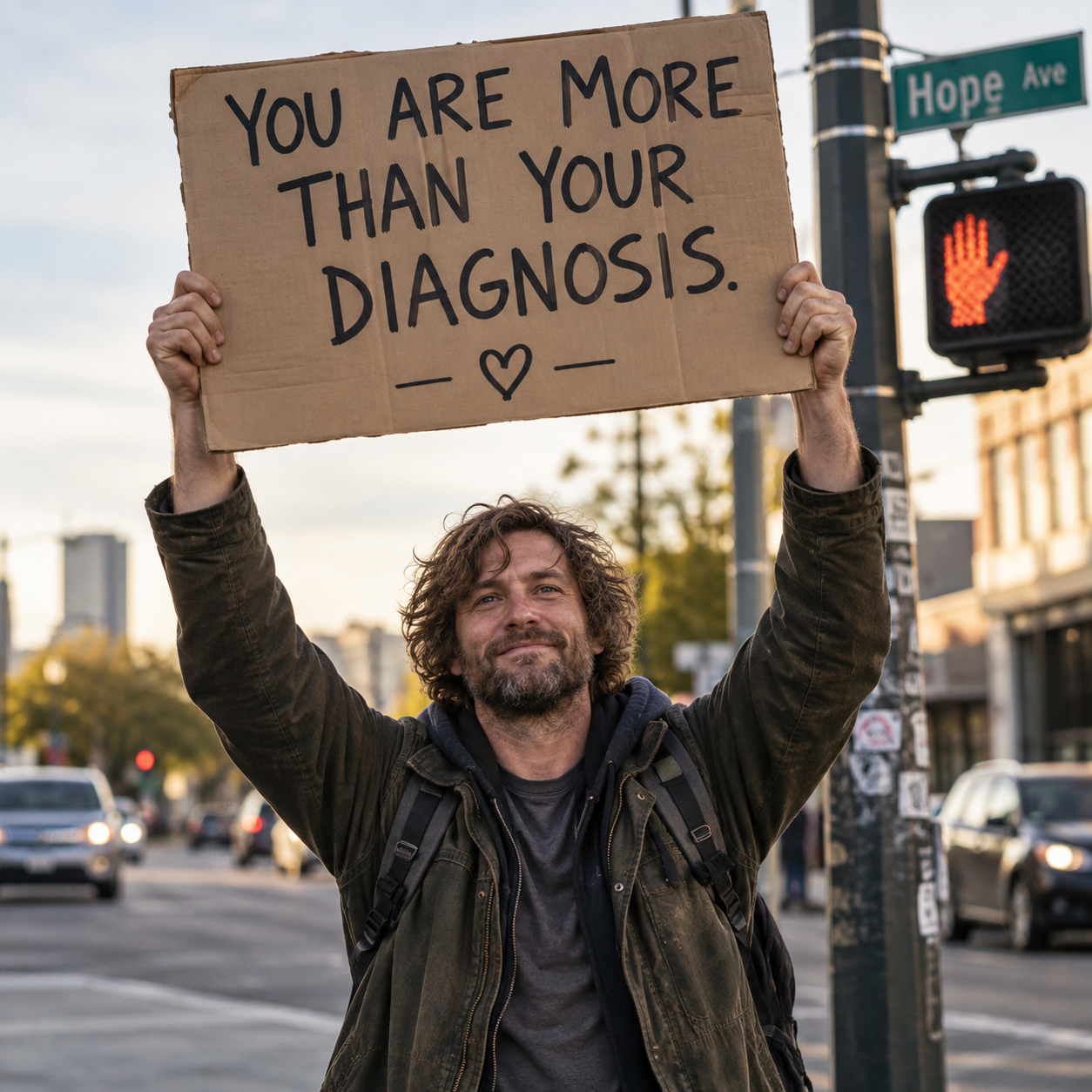
A diagnosis can help us understand patterns in our lives. The problem is that it can also slowly become part of our identity until we stop asking what might be possible beyond it. When that happens, we can often feel threatened if someone suggests that we don’t have to live out of the diagnosis.
The idea of healing can become threatening.
Words like gaslighting, narcissist, toxic, boundaries, and triggered can help us recognize unhealthy patterns. They can also become weapons we use to diagnose other people, protect ourselves from criticism, or end conversations we don’t want to have.
The problem isn’t the words. It’s forgetting that they’re tools.
A hammer is useful because there are things that need to be hammered.
But once you have a hammer, everything can start looking suspiciously like a nail.
I can’t help but wonder if we’re doing something similar with psychological language.
We have more language available to describe our internal experiences than perhaps any generation before us. In many ways, that’s a gift. But having better words doesn’t automatically make us healthier people. If you don’t believe me, just get online and follow a discussion about the Lindsay Clancy trial.
You can know what “triggered” means and still not do the work to learn how to regulate yourself. Incidentally, can we please slay the word “dysregulated?” Especially when what we mean is temper tantrum?
You can study and know your attachment style but still not do the work to become a secure attacher and use your style as an excuse for why you don’t love someone well.
You can know what gaslighting means but that doesn’t guarantee your interpretation of an argument is accurate.
Having watched a couple videos on boundaries doesn’t mean you’re not manipulating people and calling it having boundaries.
Put bluntly, knowing why you behave the way you do doesn’t change the behavior.
Knowing isn’t becoming.
That distinction is so important for healthy living. For whole living.
I’ve spent much of my career helping people understand themselves. I believe deeply in the value of that work. Understanding why we do what we do can change our lives
But, if I left my clients there, I would have failed them. Eventually understanding has to lead somewhere.
No, that’s not right. Understanding does eventually lead us somewhere. The question is do we choose where it leads us or do we just passively end up someplace that we might not want to be living unfulfilling, miserable lives?
At some point, we have to ask:
What am I going to do with what I now know?
That’s where I think some—maybe most—of our conversations about mental health have gone sideways.
We’ve become remarkably good at naming. I’ve not seen as much effort at doing. We’ve gotten so good at accepting mental health that we seem to have forgotten that accepting it was for the express purpose of healing and growth. It’s supposed to be not allowing the things that have happened to us to define us so that we could choose who we are becoming.
We can name our trauma and identify our triggers. We can explain our attachment style while discussing our nervous system. We can diagnose the dysfunctional patterns in our families. We can explain why confrontation terrifies us and why criticism makes us defensive.
That information can be valuable—if we use it to intentionally become someone who is healthier and more whole.
Because none of it changes us simply because we know it. There is a difference between having insight and developing wisdom.
Insight says, “Now I understand why I do this.”
Wisdom asks, “Now that I understand it, what should I do?” This is the impetus of change.
That second question is harder.
Because information is relatively cheap.
Change is almost always expensive. I’ve told many clients that all change is loss, even good change. And all loss needs to be mourned for us to heal.
Change might require me to tolerate discomfort. It almost certainly will require me to do many things I do not want to do so that I can become who I want to become.
It might require me to accept that something terrible happened to me while also deciding that what happened to me doesn’t get unlimited authority over who I become.
Knowledge or words can’t make those decisions for us.
What they can do is help us understand the choices we’re facing. That’s what tools do when used effectively.
The danger comes when we start serving the tool instead of using it.
This is especially important because the words we repeatedly use don’t just communicate something to other people.
They communicate something to us.
Every time you speak, at least two people hear your words: the person you’re talking to and the person speaking those words: YOU!
Tell yourself often enough that you’re anxious, avoidant, traumatized, broken, incapable, unsafe, or just “the kind of person who…” and eventually those words can begin establishing the boundaries of the person you believe you’re capable of becoming.
Words shape the stories we tell.
The stories we tell shape what we notice. We find what we expect to find and see what we assume we’ll see. For a fascinating scientific breakdown of this phenomenon look up Adam Grant’s work.
It can be difficult to accept that what we notice shapes the choices we make.
And over time, those choices participate in shaping who we become.
That’s why this conversation is bigger than whether people overuse the word trauma.
I’m interested in something much deeper.
Who are your words helping you become?
Do the words you use about yourself create greater understanding while leaving room for growth?
Having a diagnosis of ADHD was never meant to make you stuck in a place where you constantly have an excuse for not meeting deadlines or showing up when you said you would. It should help you understand why you might have to work harder than someone without the diagnosis and to strategize in order to achieve those things.
Do the words you use about other people help you see them more clearly, or simply make them easier to dismiss?
Does your psychological vocabulary increase your curiosity?
Does it increase your responsibility?
Does knowing more about yourself help you make different choices?
Those are better questions than arguing about whether society uses a particular therapy word too often.
Our goal was never to have the right vocabulary. It should have been, and I believe it was, to become healthier.
Words can help us do that.
They can help us understand our experiences, communicate our needs, recognize harmful patterns, develop compassion for ourselves, and make sense of things that once seemed impossible to understand.
Use them. Just don’t hide behind them.
Don’t let a word become an excuse. Don’t let a diagnosis become a destiny.
Don’t look so closely at the label that it becomes your identity.
I’m begging you, don’t let language designed to help you understand yourself become language that prevents you from changing yourself.
Your words are powerful tools. Use them with intentionality.
Then do the much harder work of becoming.
There are two practices that might help us figure out whether our words are helping us grow or becoming places to hide.
First, pay attention to your “I am” statements.
For the next week, listen to the words you use after “I am.” What are they? Who or what are you identifying as?
I often remember a friend recounting a story of how she had dropped a bucket of feed in the barn and immediately said, “OH! I am such an idiot.”
Her husband was there and said, “No, you are not. You are an incredibly smart woman who just dropped a bucket of feed. That’s it.”
Don’t immediately correct yourself. Don’t shame yourself for saying them. Just notice them.
Then ask a few questions:
“Am I describing something I experience, or am I declaring something about who I am?”
“Is what I’m stating about my identity true?”
“Would I want someone I love to describe themselves that way?”
There is a difference between “I struggle with anxiety” and “I am an anxious person.” There is a difference between recognizing that you tend to avoid conflict and deciding you are simply an avoidant person.
If you discover that you’ve turned an experience, diagnosis, tendency, or struggle into an identity, experiment with changing your language.
Changing the way you talk won’t automatically change you. It will change the way you view yourself over time.
Then, examine what your words allow you to do next.
This one might be harder.
Take some of the psychological language you regularly use and finish this sentence:
“Because _ is true, I get to _.”
Because I have trauma, I get to…
Because I’m triggered, I get to…
Because I have ADHD, I get to…
Because that person is toxic, I get to…
Because I’m an introvert, I get to…
Because my nervous system is overwhelmed, I get to…
Then look at your answers.
Does the language help you understand what you need to work on?
Does it point toward a skill you need to develop, a boundary you need to establish, help you need to seek, or a difficult decision you need to make?
Or does the language repeatedly give you permission to avoid, blame, withdraw, stop trying, or demand that someone else change?
Worse, does it just keep you stuck?
The goal isn’t to stop using psychological language. The goal is to notice what that language is doing in your life.
Good words should help us see ourselves more clearly.
Then we have to decide what we’re going to do with what we see.
That’s how we intentionally become someone we want to be.
When we choose and act wisely.
You can subscribe here.