

Most people think conflict is the problem.
They won’t say that out loud. In fact, most will tell you conflict is necessary for healthy relationships.
But watch what they do. They treat it like the plague.
They talk about the importance of hard conversations yet quietly structure their lives to avoid them. They tell themselves they are being patient. Or gracious. Or wise.
But in practice, they are managing discomfort.
Conflict isn’t the problem.
Avoidance is.
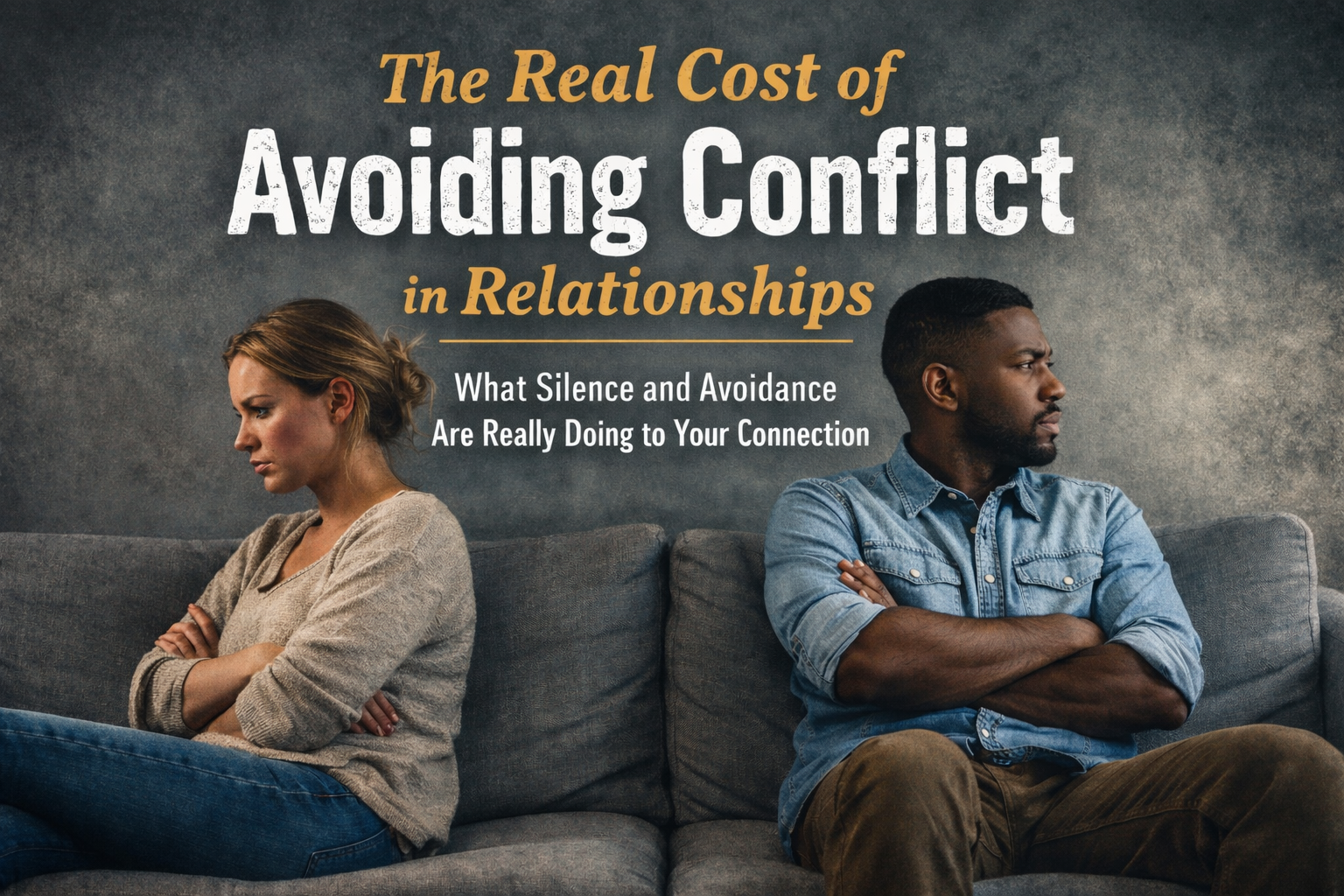
To be fair, we’ve all seen conflict handled poorly. We’ve watched conversations escalate. We’ve experienced words used as weapons. We’ve felt the relational damage that comes when tension isn’t managed well.
That’s part of why we hesitate.
But seeing something done wrong does not mean the thing itself is wrong.
It means it needs to be done better.
Hard conversations are uncomfortable. Yes. But discomfort is not damage. Discomfort is often growth trying to happen.
The issue is not that conversations are hard. The issue is that we have trained ourselves to believe two lies. First, we believe emotional tension means something is wrong. Secondly, we believe temporary peace is more valuable than long term growth.
So we back away.
We tell ourselves we are being patient. Or gracious. Or wise.
Sometimes we even call it “keeping the peace.”
But often what we are really keeping is our own comfort.
And comfort has a way of quietly costing us.
When you do not say what needs to be said, it does not disappear.
It turns into internal commentary. It becomes a quagmire that traps you.
You replay the moment.
You rehearse what you should have said.
You start collecting evidence.
You build a case in your own head.
Now you are not just dealing with one moment. You are dealing with a narrative.
Resentment rarely explodes out of nowhere. It accumulates in silence.
And the part that most people miss?
When you avoid a hard conversation, you are not protecting the relationship. You are training it to operate without honesty.
That is not peace. That is fragility.
We need to cultivate emotional intelligence (EI).
Emotional intelligence does not mean you never upset anyone.
It means you can tolerate your body’s activation and subsequent emotional elevation long enough to respond in accordance with values instead of fear.
Hard conversations require three things:
First, they need self-honesty. What am I actually feeling? Not the surface answer. The real one.
Second, they require ownership. My emotions are coming from my interpretation, not directly from their behavior. If I do not examine that, I will show up accusing instead of communicating.
Third, regulation is needed. Can I stay steady while this is uncomfortable?
If the answer to that last question is no, the conversation will either become an attack or a shutdown.
Neither builds trust.
Every time you avoid a necessary conversation, you send yourself a message:
I cannot handle this.
That belief shrinks you.
Every time you lean into one with composure, you send yourself a different message:
I can handle tension.
That belief helps you expand your ability to live fully.
Hard conversations are not just about the relationship. They are about identity.
Do you see yourself as someone who can tolerate discomfort for the sake of alignment?
Or are you someone who needs external calm in order to feel stable?
Those are very different ways of moving through life.
Not Every Conversation Ends Well
Let’s be honest.
Sometimes you have the conversation and the other person deflects.
Or escalates.
Or refuses responsibility.
That does not mean the conversation was a mistake.
You are responsible for how you act.
You are not responsible for how they respond.
Avoidance guarantees stagnation.
Honesty at least creates the possibility of growth.
And that is always more stable than illusion.
If your peace depends on never having hard conversations, it is not peace. It is control.
Real emotional maturity is the ability to stay grounded when tension shows up. Hard conversations are not signs that something is broken. Often, they are signs that something is trying to grow.
May we choose growth over comfort.
May we stop calling avoidance wisdom.
May we have the courage to say what is true without aggression and without apology.
May we examine our own beliefs before we assign blame.
May we tolerate the tension that growth requires.
May we protect our integrity more than our image.
And when hard conversations come, may we stay steady, honest, and present— trusting that discomfort is not the enemy, but often the doorway to something stronger
Subscribe here.