

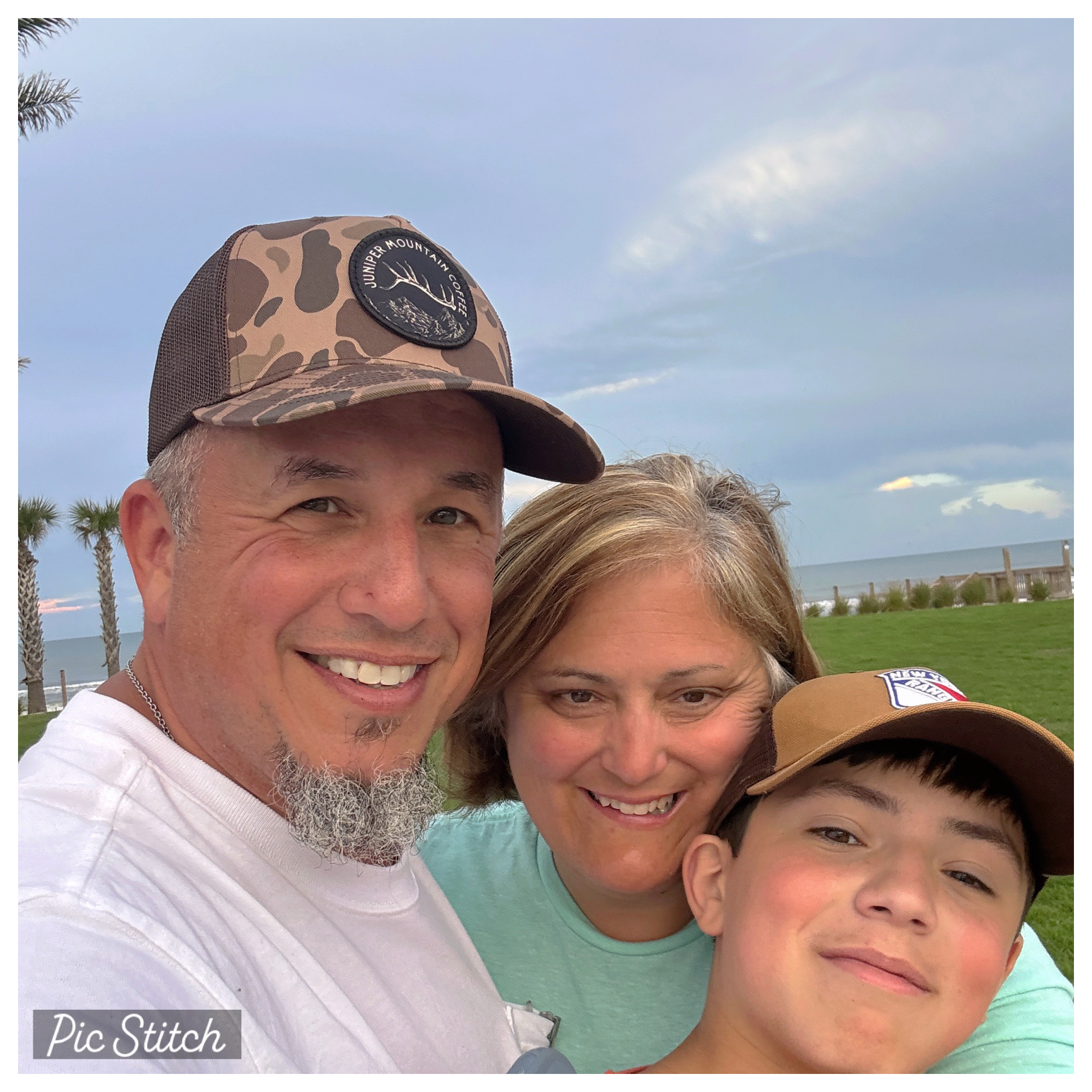
Today’s post is a little different. My wife, Erica, is taking over Emotionally Inclined to share something deeply personal. From time to time, you’ll hear from her here, bringing her own perspective, experiences, and insights. Today, she’s sharing a part of her story that she rarely talks about publicly. I’m grateful she’s willing to share it with you.

Lately, I’ve found myself reading news stories about people whose public lives look very different from what happens behind closed doors. I keep trying to understand the deceit, the manipulation, and the harm.
The hardest part is realizing why these stories hold my attention: some of those patterns feel painfully familiar.
I rarely share this part of my life. There are many reasons, but mostly, I don’t want to revisit the hell my family endured. I don’t want my story to define me. And some of the details sound so unbelievable that even now, I struggle to make sense of them.
Over the last few years, though, I’ve felt increasingly convicted to speak. I started by sharing with a few people I felt safe with.
Here is the part of my story most people don’t know.
From the outside, my childhood looked normal. I had two loving, hardworking Christian parents. We attended a Christian school, our needs were met, and my parents worked hard to give us a good life.
What people didn’t see was what happened behind closed doors.
Before I was born, my parents adopted my biological cousins, who became my sister and brother. They had experienced significant trauma before coming into our home.
My oldest sister was my buddy growing up. She was twelve years older than me. She cared for me while my mom worked, snuggled me when I was afraid, and left home when I was ten.
My relationship with my brother was very different.
As a little girl, I watched him lie, steal, manipulate, and hurt others. I remember the calls home from school and the way his behavior continued to escalate. There was running away, theft, and eventually repeated threats to kill our family. There were times he acted on those threats.
But there were also moments when he was sweet and caring.
That is part of what made it so confusing.
I loved my brother. I held tightly to the good memories and hoped that version of him would stay. Looking back, I can see how much hope I placed in those moments, even while the frightening ones kept happening.
Over time, the threats increased. Our home was broken into. There were relationships with multiple women, sometimes at the same time, and letters filled with promises that weren’t kept. There were repeated prison sentences.
I remember police surrounding our house in the middle of the night because they believed we were harboring a fugitive.
I also watched him present himself in many different ways: a pastor, a wealthy businessman, a successful farmer, a singer. What he told people often did not match what I knew from living through it.
That gap between his public image and our private experience was deeply painful.
I’ve also learned that tears and words of remorse don’t necessarily mean someone has repented. Someone can cry, say all the right things, and appear deeply sorry. But godly sorrow leads to repentance. I look for what follows the tears: accountability, respect for boundaries, and changed behavior over time.
Sixteen years ago, I ended my relationship with my brother. It was one of the hardest decisions I have ever made.
I loved him. I still love him. I hate that this is part of our story.
But I could no longer remain in a relationship where I experienced manipulation and fear. I could no longer keep receiving calls about the latest crisis and being pulled back into it.
My story has taught me to look beyond charm, religious language, and a convincing public image.
I pay attention to what happens over time. Do someone’s actions match their words? Do they take responsibility for the harm they cause? Do they respect boundaries, especially when those boundaries keep them from getting what they want?
I’m still learning how to tell this story without letting it consume me. I don’t have to assign my brother a diagnosis to name what I experienced.
I can love him, grieve what I hoped our relationship would be, and keep the boundary I chose sixteen years ago—all while wishing things were different.
If you’ve experienced something similar, you may understand the confusion of never knowing whether you’ll encounter kindness or cruelty from someone you love.
These experiences have shaped who I am today. Although I rarely talk about this part of my life, it is part of my story.
Through everything we’ve endured, my family has grown closer. We’ve learned to protect one another, recognize deception, and set boundaries. I wish we hadn’t needed to learn those lessons this way, but I’m thankful for the love and strength we’ve found in each other.
Here is the part I am most hesitant to share because I don’t want sympathy. By God’s grace, I have found healing. I’m sharing because someone reading this may still be hurting, and I want you to know healing is possible.
I grew up afraid of being murdered. I watched my mom cry day after day. My emotions were played with like a violin.
I learned to please people, push down my feelings, and stay in the background. I struggled to feel worthy, smart, or beautiful.
What I felt most was anxiety. It ruled my life. I was constantly afraid.
But with the help of my husband, I began to realize that the ways I had learned to survive didn’t have to determine how I lived the rest of my life.
I didn’t have to please everyone.
I could learn to express my feelings.
I could believe in myself.
I could build a life where fear didn’t make every decision.
Healing was a journey. It took time, support, faith, and learning to see myself differently.
By God’s grace, I am no longer living the way I once did.
If you’re still hurting, you haven’t failed. Your journey may look different from mine, and you deserve support along the way. I believe with all my heart that healing is possible for you, too.